A scrap quote can feel like a mystery. You call a buyer, they glance at a pile of metal, and a number comes back — but where does it come from? The honest answer is that a fair scrap price is built, not guessed. It starts with global metal markets, adjusts for the grade and cleanliness of what you are selling, factors in local demand, transport and labour, and finally lands on an accurate weight taken in front of you. This guide walks through each step so you can tell a transparent quote from a vague one — and get a fair price for scrap anywhere in Hyderabad.
What 'scrap price' really means
There is no single 'scrap rate' that applies to every seller on a given day. Scrap is not one material — it is dozens, each with its own value, and the price for any lot depends on what is actually in it. A kilogram of clean copper wire is worth many times a kilogram of mild-steel offcuts, and a mixed bag of both is worth somewhere in between once it is sorted.
So when a buyer quotes 'the scrap rate', the useful question is: the rate for which metal, at what grade, by what weight? A genuine quote answers all three. A good buyer sorts a mixed lot into its separate metals first, weighs each grade on its own, and prices each at its own rate — rather than averaging everything down to a single low number.
The global anchor: metal exchange rates
Base-metal prices around the world take their lead from international exchanges — most importantly the London Metal Exchange (LME) for copper, aluminium, lead, zinc and nickel, with domestic futures tracked on India's MCX. These exchanges set a reference price for refined metal, which flows down through refiners, traders and finally to local scrap rates. That is why your scrap price can move day to day even if nothing about your metal changed: the underlying market moved.
It is important to understand what this link does and does not mean. The exchange price is for pure, refined, exchange-grade metal — not for the mixed, coated or partly-oxidised scrap in your store-room. Scrap always trades at a discount to the refined price, because it still has to be collected, sorted, cleaned and re-melted. So a fair buyer's rate tracks the market trend, but it is never simply 'the LME number'. For current reference values at the time you sell, the LME (lme.com) and MCX India (mcxindia.com) publish live data.
Grade, purity and contamination
Within a single metal, grade is the biggest swing factor. Copper is the clearest example. Bright, bare, clean copper wire is the top grade. The same copper with its plastic insulation still on — 'insulated' or 'tainted' copper — is worth noticeably less per kilogram, because the buyer pays only for the recoverable copper inside, not the plastic, and someone has to strip or granulate it. Heavily oxidised, soldered or alloyed copper drops another grade.
The same logic runs through every metal: pure aluminium sheet versus cast or alloy aluminium; clean brass versus mixed or plated brass; clean iron versus rusted or painted steel mixed with other materials. Contamination — attached plastic, rubber, concrete, wood or other metals — reduces the recoverable yield and therefore the price. Standards bodies such as the Bureau of Indian Standards (bis.gov.in) define metal grades formally; in practice, a trustworthy buyer will show you how they are grading each part of your lot and why.
Local factors: demand, transport, labour, quantity
On top of the global rate and the grade sits a layer of local reality. Local demand matters: when nearby re-rolling mills, smelters and foundries are buying actively, rates firm up; when they are quiet, rates soften. Logistics matter too — the cost of sending a vehicle and crew to your location, loading and transporting the material is real, and it is built into any honest quote.
Quantity cuts both ways: a large, clean, single-metal lot is efficient to handle and can earn a better per-kilo rate, while a tiny mixed lot carries proportionally more handling cost. Jobs that need dismantling — cutting a structure down, removing cabling or clearing a site — involve labour and time that factor in as well. None of this should be hidden; it should simply be reflected transparently in the final number.
The weighbridge: how fair weight is established
Even a perfect rate means nothing if the weight is wrong. This is where many disputes start, and where transparency matters most. A fair buyer weighs your material on a calibrated digital scale, in your presence, so you can see the reading. Royal Traders does exactly this — scrap is weighed in front of you on a calibrated digital scale, and mixed lots are sorted and weighed by grade before pricing.
Watch for a few things: the scale should zero correctly before weighing; large lots are best weighed in clear batches you can follow; and the weight that is quoted should be the weight you saw, with no quiet adjustments afterwards. Weighing in your presence is not a courtesy — it is the single best protection a seller has.
Red flags to watch for
A few patterns reliably signal a buyer to be careful with. First, a fixed, published 'per-kg rate' for all scrap, advertised as if it never changes — real rates move with the market and depend on grade, so a static headline number is usually a hook, not a promise. Second, take-away weighing: any buyer who wants to load your material and weigh it 'back at the yard' rather than in front of you has removed your ability to verify the weight.
Third, vague or shifting deductions — unexplained 'moisture', 'handling' or 'wastage' cuts that appear only at payment time. Fourth, pressure to decide instantly before you have seen a clear breakdown. A fair quote is itemised and calm: this metal, this grade, this weight, this rate, this total.
How to get a fair quote: a simple checklist
To get a transparent price for your scrap, a simple routine helps. Sort roughly if you can — keeping copper, aluminium, brass and iron separate makes grading faster and fairer. Send a photo on WhatsApp first for an indicative quote before a visit. Ask the buyer to sort and weigh each metal separately, in front of you, on a calibrated scale. Ask for the rate per metal and the weight for each, not just a single lump sum. Confirm the total before anything is loaded, and get paid on the spot.
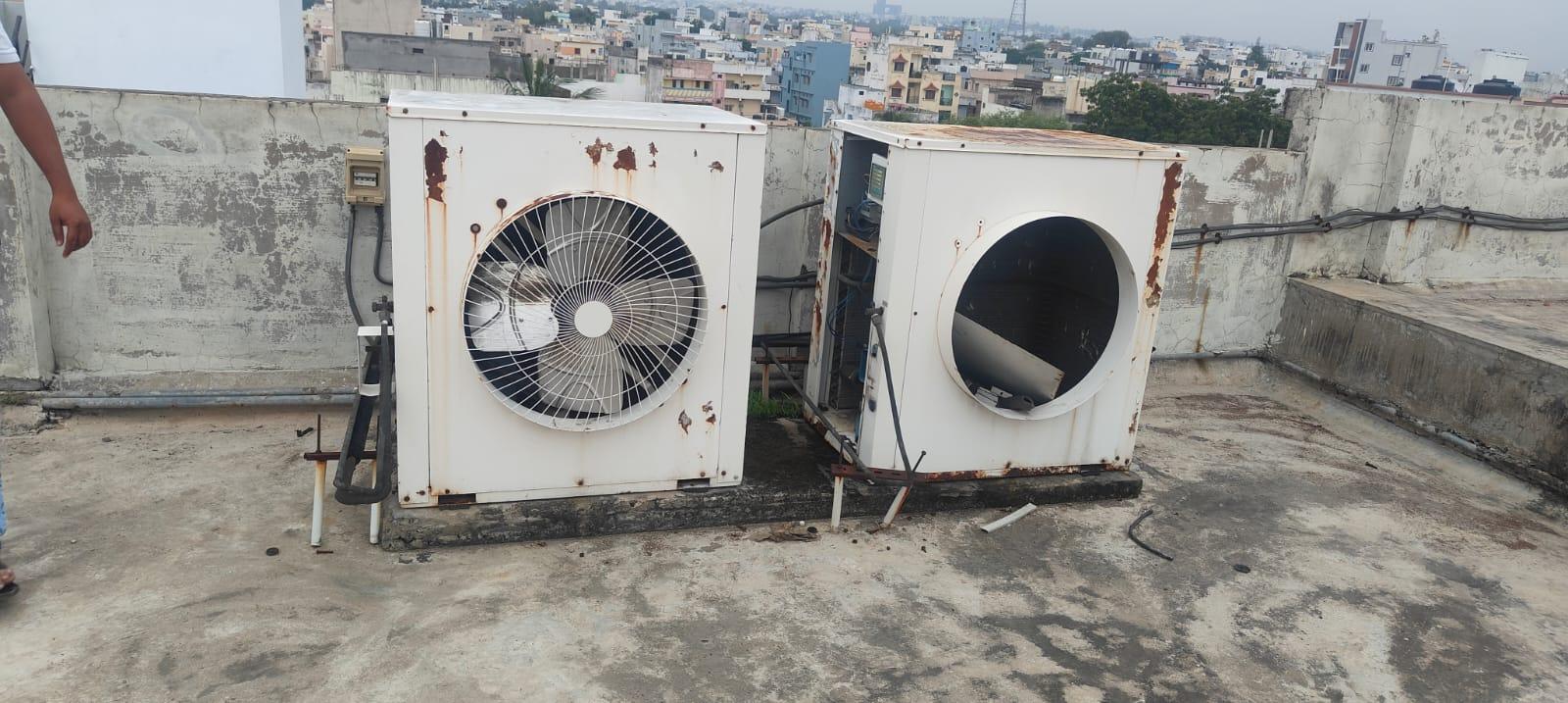
If you are clearing air conditioners, generators or a whole site, the same principles apply to the copper, compressors and mixed metal inside them. The goal is always the same: a number you can see being built, step by step, rather than one handed down.
Where to go next
Frequently asked questions
Why do scrap prices change daily?
Because scrap rates track the international and domestic metal markets (such as the LME and MCX), which move every trading day. When refined-metal prices rise or fall, local scrap rates follow the trend. Grade, quantity and local demand then adjust the final number for your specific lot.
How is my scrap weighed fairly?
On a calibrated digital scale, in your presence, after mixed lots are sorted into separate metals. You should see the scale zero before weighing and see the reading for each grade, and the weight quoted should be the weight you saw — with no adjustments afterwards. Weighing away from you is the main thing to avoid.
Why is copper worth more than iron?
Copper is far scarcer and more valuable as a refined metal than iron, and it is highly recyclable with little loss, so recovered copper commands a much higher price per kilogram. Within copper, clean bare wire is worth more than insulated or oxidised copper because more of it is directly recoverable.
Do you pay the LME rate?
No buyer pays the exact LME rate, because that price is for pure, refined, exchange-grade metal — not for mixed or coated scrap that still needs collecting, sorting, cleaning and re-melting. A fair rate tracks the market trend and is then set by the grade, cleanliness, quantity and local demand for your actual material.
Related categories
Ready to sell?
Get a free, on-the-spot quote. Pickup is free across Hyderabad.